Areas of Expertise
The most common conditions and disorders that can benefit from a chiropractic care programme.
Neck Pain
The cervical spine is one of the body’s most important curves, since it is the first point where the brain sends information to every other part of the body.
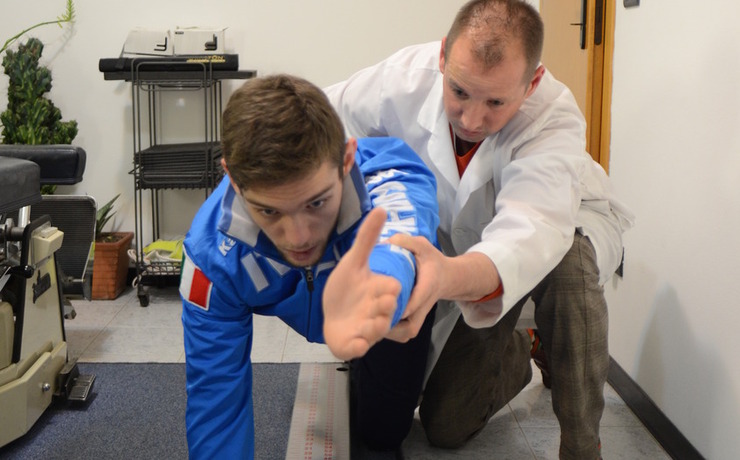
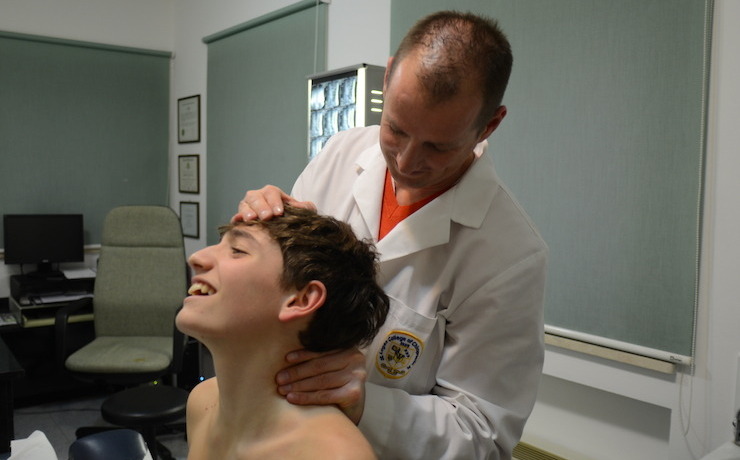
The neck is the most vulnerable part of the spine. It not only supports the head, preserves its natural curve and allows it to rotate, but is also responsible for the correct transmission of nerve impulses between the head, face, hands and the rest of the body. When the joints, muscles or ligaments of the neck stop working normally, a variety of symptoms can appear, often caused by poor posture, arthrosis, disc protrusions or trauma. The first signs are usually pain and stiffness in the neck, frequently associated with pain at the back of the head and in the shoulders. In some cases the joints can trap a nerve, causing pain that radiates down the arm together with tingling in the fingers or hand. Chiropractic treatment aims to restore normal joint function and muscular balance.
If the neck is the weak point of your body, the effects of stress will tend to show up there. Chiropractic care can help improve your tolerance to stress with simple treatments and without the use of medication.
Headaches
Treating headaches with chiropractic care: finding the cause in order to apply the right therapy, without medication.
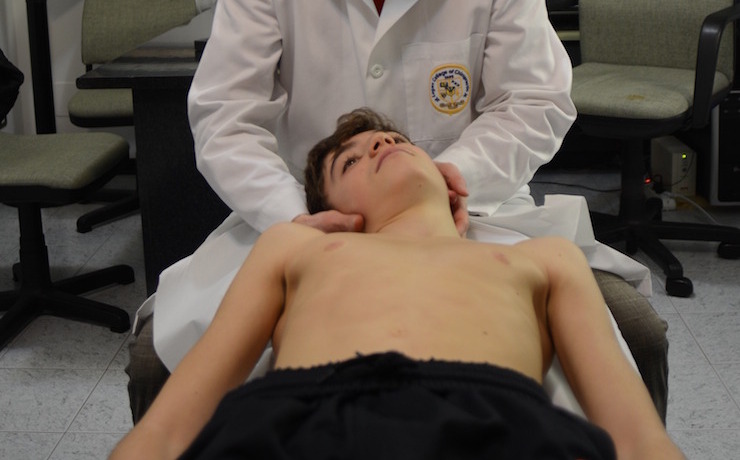
Heaviness and pain in the neck extending to the shoulders and the base of the skull, nausea, headache and a sense of dizziness: these are the complaints reported by patients suffering from neck pain and migraine. These headaches present with different symptoms, but they often share a common factor: painful muscular tension. Alternative care techniques, chiropractic in particular, can help those suffering from tension-type neck pain, migraine, headache and jaw-related disorders, because they help the patient identify the cause of the headache and apply the most suitable therapy, without the use of painkillers.
Herniated Disc
Relieving back pain with chiropractic care: overcoming pain without drugs or surgery.
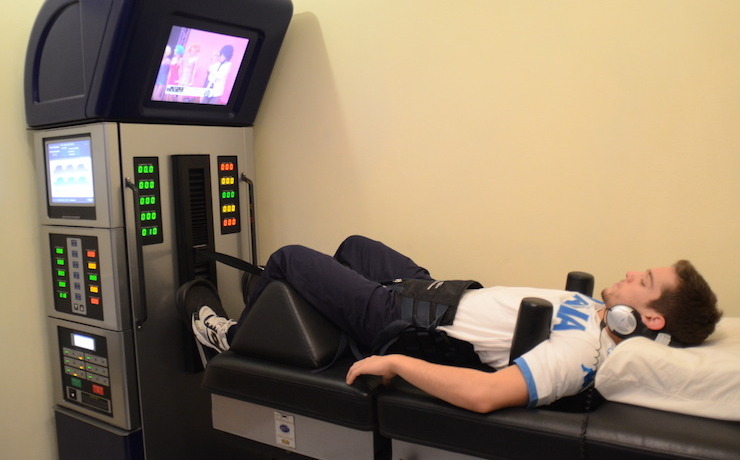
A herniated disc occurs when the nucleus of the disc protrudes and directly irritates the sciatic nerve. This can happen at any level of the spine, but most frequently at the L3, L4 and L5 discs. Symptoms of a herniated disc range from intense pain and sciatica to tingling, loss of strength and difficulty standing. The chiropractor treats a herniated disc specifically by working on the whole spine in order to relieve the stress affecting the damaged disc.
Low Back Pain
Chiropractic treatment is one of the best ways to relieve low back pain.
Poor alignment or incorrect posture of the spine can irritate the lumbar area, resulting in low back pain. Below is a list of the ways low back pain can present itself.
Herniated disc
Also called disc protrusion or extrusion. This is a condition in which part of the gel-like content of the disc migrates through the layers of the outer fibrous ring. This causes mechanical pressure on nearby structures and triggers chemical reactions that cause pain and inflammation. Nerve irritation often also causes numbness and tingling in the legs and feet.
Disc degeneration
This is a state of dehydration and deterioration of the disc, marked by a gradual loss of its ability to bear and distribute loads. The more worn the discs are, the more sensitive they become to physical stress. Disc degeneration plays an important role in the formation of bulging discs, herniations and disc-related stenosis.
Facet joint syndrome
The facet joints are spinal joints that help keep the vertebrae aligned. This syndrome is often associated with trauma or disc degeneration and is characterised by pain, stiffness and inflammation. Pain is generally relieved by rest and increases with movement.
Sciatica
This is a condition often associated with a herniated or degenerated disc. When the affected disc compresses one of the spinal nerves that form the sciatic nerve, it produces pain that runs through the buttock, down the leg and sometimes below the knee. Stiffness and tingling are very common. Sciatica can appear suddenly or develop gradually, and the pain can be made worse by coughing, sneezing, or staying in the same position for long periods of time.
Whiplash
Whiplash and chiropractic care: treating hyperextension and hyperflexion without medication.
Whiplash is a sudden, traumatic movement of the head caused by a car accident, a sports collision, a fall or a head injury. At the moment of impact the head is thrown forward, compressing the neck (hyperflexion), or bends backward while the reflex muscles contract (hyperextension): in both cases the natural curve of the spine is temporarily lost. Whiplash symptoms can remain silent for a few days, months, or even years. A chiropractic visit is needed to relieve the pain without medication and prevent changes to the spinal structure, especially in the neck. In cases of whiplash, the chiropractor focuses in particular on restoring the correct alignment of the spine and the balance of the nervous system, while treating the ligaments and the intervertebral discs.
Plantar Fasciitis
Plantar fasciitis is the inflammation of the tissue on the sole of the foot, causing heel pain and pain along the arch.
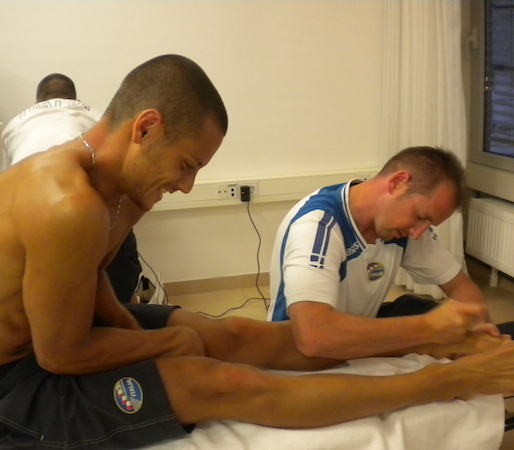
Plantar fasciitis is the inflammation of the tissue on the sole of the foot, causing heel pain and pain along the medial arch of the foot. Clinical findings often show limited ankle dorsiflexion, limited extension of the big toe joint, an altered gait pattern, reduced foot strength, or an abnormal position of the subtalar joint. Non-invasive treatments are often successful and can lead the patient to recovery by reducing pain, restoring proper movement and strength, and limiting the biomechanical deviations caused by structural abnormalities. Soft tissue manipulation techniques can restore functional mobility in the flexor muscles and the plantar fascia. The therapist can work both manually and with specific instruments. These techniques are also useful for promoting healing during phases of soft tissue dysfunction. The Graston Technique is a form of manual therapy that uses patented steel instruments specifically to restore mobility in soft tissue. These instruments help the doctor locate and release adhesions (scar tissue). This technique has proven to be very effective for both acute and chronic cases of plantar fasciitis.
Medial Collateral Ligament
An injury to the knee’s collateral ligament rarely requires surgery for a full recovery.
Even complete tears can usually heal on their own. Non-invasive treatments are recommended, using ice and electrical stimulation to reduce local pain and inflammation, together with therapeutic exercises to restore strength and full range of motion of the knee. A knee brace or elastic band can also be used to provide extra stability and protect the ligament from harmful stress. Soft tissue manipulation techniques and cross-fibre massage reduce swelling and speed up the recovery of injured tissue. Both can be carried out manually or with dedicated instruments. The Graston Technique is a form of manual therapy that uses patented stainless steel instruments designed to restore mobility in soft tissue. Studies conducted on animal models have shown that Graston instruments accelerate the healing process by stimulating the fibroblastic repair response, resulting in increased production of collagen fibres. This approach has been shown to improve the biomechanical properties of the ligament during the healing process. A ligament treated with this technique has proven to be stronger and more resistant than an untreated one. Exercise, too, has been shown to increase collagen synthesis and the tensile strength of the medial collateral ligament, compared with simply keeping the joint immobilised.
Sports Injury
Resolving sports injuries through chiropractic care.
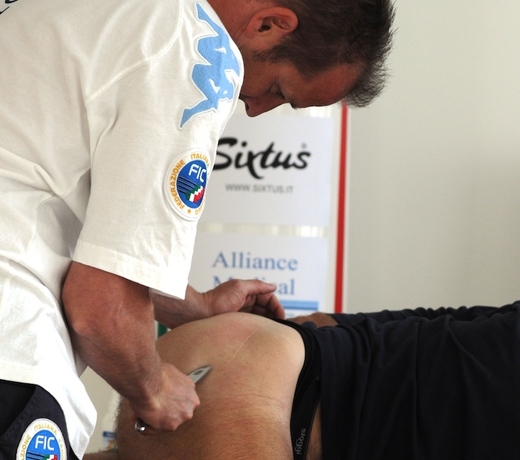
Chiropractic care specialises in treating accidental sports injuries affecting the entire joint structure, and the spine in particular. Athletes who play football, American football, bodybuilding, basketball, volleyball, tennis, horse riding, rugby, skiing and snowboarding can resolve physical issues through manipulative treatments performed by a chiropractor. Beyond treating sports injuries, this natural branch of medicine is also ideal for prevention: a chiropractic specialist identifies and corrects defects in the body’s structure and nervous system function, helping to prevent future injuries.